
What Is Turf Installation on the Sunshine Coast
Turf installation is the job of preparing the ground and then laying natural turf or synthetic grass so it sits flat, drains and stays green. It is for the owner of a patchy lawn, a bare yard after the builders leave, or a backyard the dog has worn down to dirt. Here is what the work involves from the first measure to the first mow.
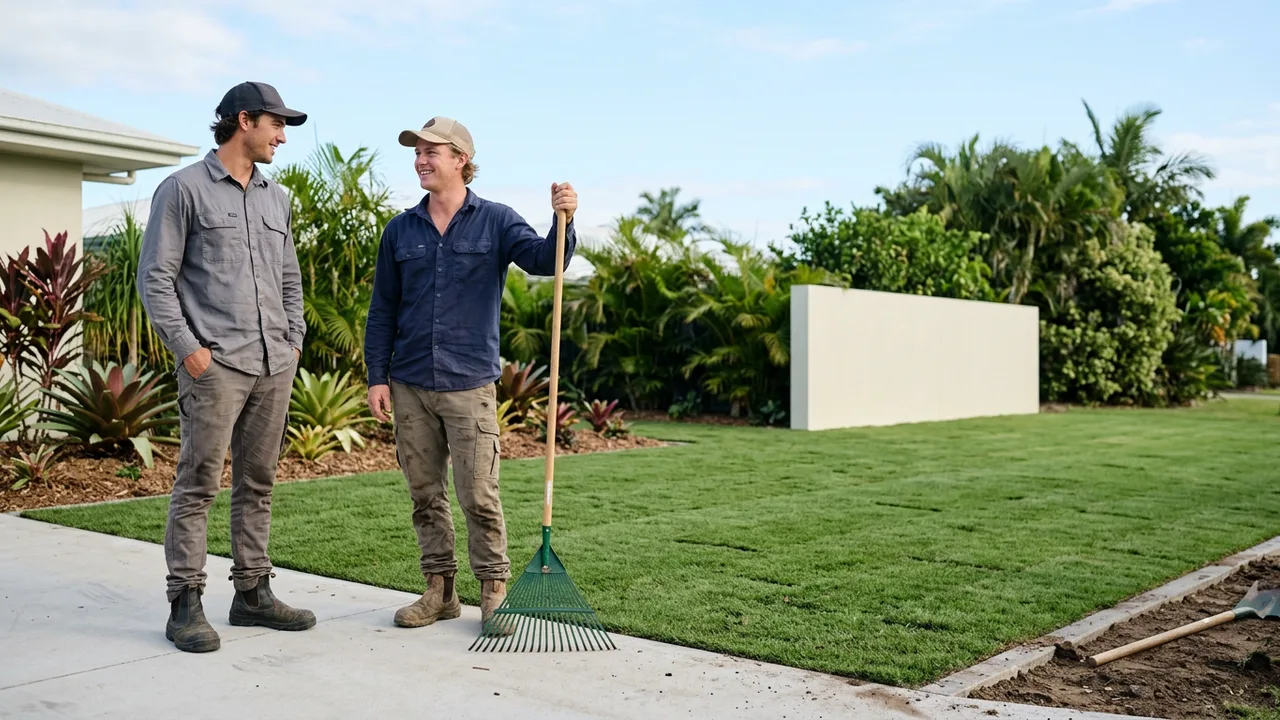
What is turf installation on the Sunshine Coast: the short answer
A proper turf installation has three parts: measuring and preparing the ground, delivering and laying the turf, and caring for it in the first weeks. Most of the result is decided before a single roll or slab goes down.
The laying itself is the quick part. The ground underneath is what decides if you get a level lawn that knits in or a patchy one that browns off in strips.
On the Sunshine Coast the ground changes a lot from one street to the next. Coastal sand drains fast and holds little water. Canal blocks can sit low and stay wet. Hillside yards carry red soil and a fall that sends water to one corner. A local installer allows for all three, which is why a lawn that thrived next door can fail on your block.
Land preparation comes first
Land preparation is the work that turns rough ground into a base turf can root into. It usually starts with clearing old grass, weeds, rubble and builders' leftovers from the surface.
Next the installer levels and grades the area. Grading means shaping the slope so water runs away from the house and does not collect in low spots. A yard that pools after rain will rot new turf, and a yard with humps will scalp under the mower.
The soil is then loosened and topped up where it is thin or hard. Compacted ground, common after building work, stops roots going down. Sandy ground may need extra soil so it holds moisture.
This is also the stage where drainage gets fixed. Skipping drainage work is the usual reason a new lawn sinks later, so ask to see it in the quote.
Natural turf or synthetic grass
Both options work on the coast, and the right one depends on how you use the yard.
Natural turf gives a cool, soft surface that you water and mow. It suits families who want grass underfoot and are happy to keep up basic care. It needs sun and decent soil, so a shaded or very sandy patch deserves a plain conversation first.
Synthetic grass stays green with no mowing and suits shaded corners, small courtyards and heavily used dog runs. Concerns about heat and smell are fair. Synthetic surfaces can warm up in direct sun, and pet urine can linger in some builds.
A good installer talks through both against your yard, your budget and your household before quoting, rather than pushing one by default.
Turf delivery and laying day
Turf delivery is timed to the laying, because cut turf starts to deteriorate once it is off the farm. Slabs or rolls arrive fresh and are laid soon after, ideally the same day.
Turf laying works like brickwork. Each slab is placed tight against the next with the joins staggered, so there are no gaps for the sun to dry out. Edges are trimmed to fit around paths, garden beds and the corners of the yard. The surface is then rolled or pressed down so the roots make full contact with the soil beneath.
Good contact matters more than most people expect. Air pockets under a slab dry the roots, and that is where brown strips begin.
Synthetic grass follows a similar order. The base is compacted and edged first, then the grass is rolled out, joined and fixed down, so it lies flat without ripples.
Why new turf dies off, and how to stop it
New turf usually dies from three causes: poor preparation, too little water in the first days, or a first cut made at the wrong time. All three are avoidable.
New turf needs watering soon after it is laid, then regularly while the roots grow into the soil. A light tug on a corner tells you whether it has rooted. If it lifts easily, it needs more time and more water.
The first mow waits until the grass has knitted in and grown enough to cut. Mowing too early drags at loose slabs and sets the lawn back.
A reliable installer gives you these watering and first mow steps in plain words when the job finishes, so the lawn you paid for actually takes.
Who this is for
If your lawn has gone brown or crispy in sections, you are in the right place. So are owners of a new house with bare dirt, people who want a yard ready to sell or rent, and anyone whose last lot of turf died off in strips.
The common thread is a yard that is not working for the people who live in it. A good result is a flat, green surface the kids and the dog can use again.
You will want a clear, itemised price before any work starts, covering prep, turf and laying. That lets you see what each part costs and judge whether the number is fair, rather than accepting a single total you cannot read.
Doing it yourself, and the licence question
You can lay turf yourself, and small, flat patches are manageable. The saving disappears when the job is a whole yard with bad levels, compacted soil or drainage problems. A rented machine, a lot of soil and a weekend of heavy lifting can still leave you with a base that may fail.
Ordinary turf supply and laying differ from regulated structural landscaping and drainage. Ask QBCC which licence is needed for the exact work, then confirm who will carry out each regulated task.
When you are weighing it up, the question is not only the price today. It is whether the lawn will still be flat and green after a wet summer.
Your next step
Tell the installer your suburb and what the yard is like now. Mention the size if you know it, what stands there at the moment, how the ground falls and whether a dog or children use it. That is enough to start a useful conversation about your turf installation.
When you are ready, use the form to request a turf quote.