
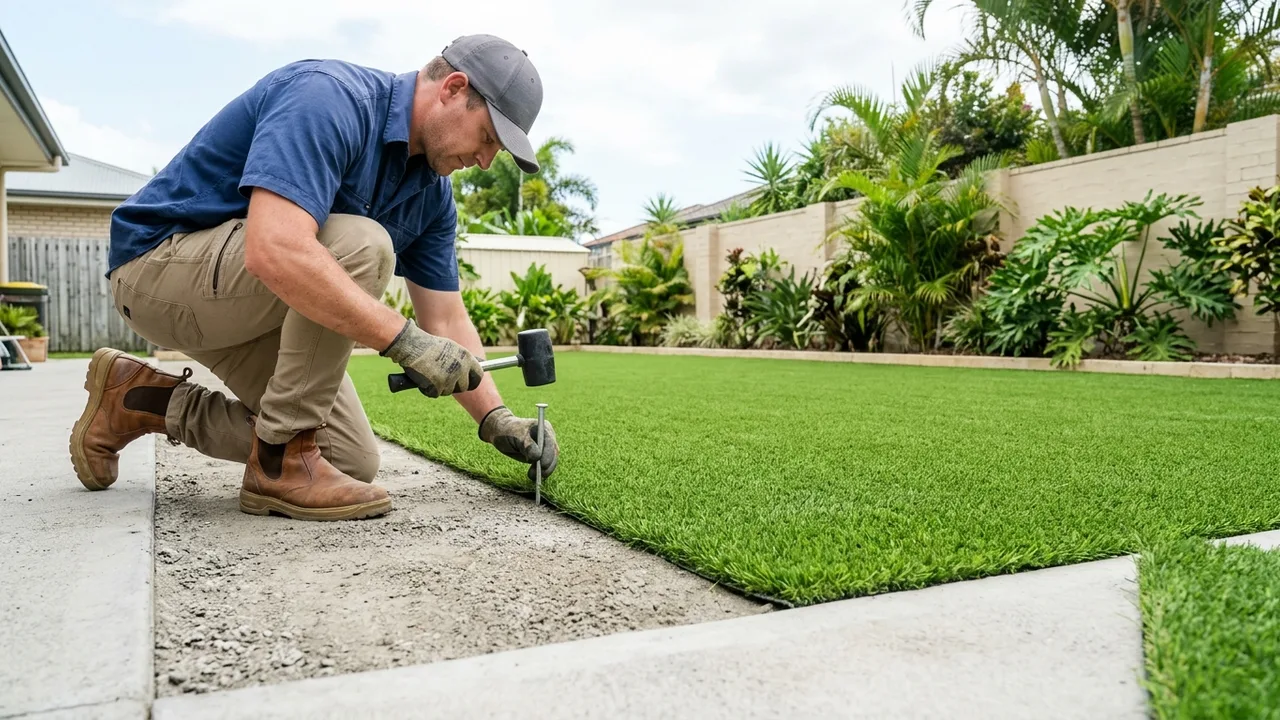
Artificial Turf Installation Sunshine Coast
Artificial turf installation on the Sunshine Coast comes down to the ground under the grass. A compacted, graded base is what stops the dips, ripples and muddy patches.
Artificial turf stays flat when the base under it is dug out, compacted and graded before any grass rolls out. If it sinks or ripples, the installer checks the base, joins and fixing method to find the cause. If your last patch of synthetic lawn went soft, or you want a worn backyard replaced with something the dog and kids can use all year, the work starts below the surface.
Artificial turf installation on the Sunshine Coast: what keeps it flat
A flat synthetic lawn is built from the ground up. The grass is the last layer, and it only looks as good as what sits beneath it.
On a bad job, the installer rolls turf over existing lawn or loose soil. A few months later the surface sinks where it is walked on, and mud shows through at the edges. That is the pattern behind most artificial grass that sinks in the middle.
A proper install removes the old surface, lays a compacted base and grades it so water moves off. Coastal sand, canal estate blocks and hillside yards each behave differently under that base, so the installer reads the ground on site before settling on the build.
Why the base decides everything and how it is built
The base is a layer of crushed rock or similar material, spread in stages and compacted with a plate compactor (a heavy vibrating machine) until it is firm and even. Each layer is levelled to a gentle fall so rain runs away instead of sitting.
Sandy ground drains freely but can move, so it needs good compaction to hold its shape. Heavier soil holds water, so drainage matters more there. On a sloping block, the base is graded so the finished lawn follows the land without a dip.
Ripples come from a different cause. They show up when turf is pulled tight, laid in the heat without room to settle, or fixed to a base that is not flat. Careful laying and a true base keep the surface smooth.
Sand infill or no-infill artificial grass
Sand infill is fine sand brushed into the pile. It weighs the turf down, helps blades stand up and suits most family yards. The trade-off is that sand can shift over time and may need topping up in busy spots.
No-infill artificial grass uses a heavier backing and denser pile so it stays put without loose material. Ask for the product’s drainage and cleaning instructions before choosing it for a pet or play area. It still depends on a firm base to stay flat.
Synthetic grass can get warm in full sun, so compare the supplier’s surface-temperature information for the proposed product.
Pool areas, driveways and backyards
Each spot asks something different of the base.
Backyards need a base that handles daily play and a dog running the same path. Drainage matters most near downpipes and low corners.
Pool areas need a surface that drains quickly and is comfortable on wet feet. The base is graded away from the pool edge, and the turf is cut cleanly around coping and fittings.
Driveways carry weight, so the base is deeper and compacted harder. The grass is fixed more securely along the edges where vehicles turn.
If drainage works or paving are part of the job, licensed specialists do that regulated work, and the installer can say which parts need it.
What drives the cost of astro turf installed
Five things move the price most: the size of the area, the turf you choose, how much base preparation the ground needs, drainage, and how easily machinery and materials reach the yard. A tight side access or a steep block means more hand work.
Removing old lawn or hard fill adds to the job, and so does a thicker base for driveways. A quote that itemises prep, turf and laying shows where the money goes, so you can compare like with like.
An on-site measure and quote lets the installer price your actual yard instead of a guess.
Nature strips and what the council decides
Artificial turf on a council nature strip is a council matter, not something an installer can decide for you. Rules on road verges differ from private land, so the council is the place to confirm what is allowed before any work goes in.
On your own block, the work is a landscaping job. If it takes in drainage or paving, those parts sit under QBCC licensing in Queensland and licensed specialists carry them out.
How it works
-
Measure the yard
The installer measures the area, notes how the ground falls and sees what stands there now, so the quote covers the real job.
-
Clear and excavate
Old lawn, weeds and soft soil are removed to the depth the base needs.
-
Build and compact the base
Crushed rock or similar base material goes down in layers, graded for drainage and compacted until firm.
-
Lay the grass and join it
The turf is rolled out, cut to fit, seamed and fixed along the edges so nothing lifts.
-
Finish with infill or brushing
Sand infill is spread where used, then the pile is brushed up so the lawn stands upright and looks natural.
Scope in detail
- Excavation and removal Old lawn, roots and soft topsoil come out first, because organic material rots and leaves hollows under the grass.
- Compacted base layer A firm, even base is what keeps synthetic grass flat under foot traffic, furniture and the weight of a dog at full speed.
- Drainage and fall The installer checks the proposed falls and drainage route to reduce water collecting beneath the turf.
- Edging and perimeter fixing Secure edges stop the grass lifting at fences, paths and garden beds.
- Joins and seams Well-matched, glued seams keep the lawn looking like one piece instead of strips.
- Infill or no-infill finish Sand infill adds weight and stability, while no-infill options suit pets and bare feet.
Artificial turf installation options
- Backyard artificial turf Full lawn replacement for patchy or dog-worn yards, with the base built to take daily use.
- Pool area artificial grass Turf for pool surrounds, with product suitability and wet slip performance checked before installation.
- Driveway and side-access turf A firmer, deeper base for areas that carry weight and traffic, finished in synthetic grass.
- No-infill artificial grass A pet and kid friendly finish that relies on a stable base and backing instead of loose infill.
Artificial turf installation across Sunshine Coast
Frequently Asked Questions
How much does artificial turf installation cost on the Sunshine Coast?
How long will an artificial turf install take on the Sunshine Coast?
What is the process for artificial turf installation?
Get it priced
Tell us what your yard needs and request a turf quote.
Describe the yard and the turf you want, and a local installer will be in touch about the quote.