
Lawn Preparation and Levelling on the Sunshine Coast
A lawn that sinks or pools nearly always has a ground problem underneath. Clearing, levelling and grading first gives new turf something solid to knit into.
Lawn preparation and levelling on the Sunshine Coast is what stops a new lawn sinking in the middle, holding puddles and browning off in strips. The turf itself is only half the job. The ground under it decides whether the lawn lies flat, drains after a downpour and lasts. This page covers what clearing and grading involves, what drives the cost and what to expect on coastal sand, canal blocks and hillside yards.
Lawn preparation and levelling on the Sunshine Coast: why lawns sink and pool
Turf only sits as well as the ground beneath it. When a lawn sinks or holds water after rain, the cause is usually underneath. Soft fill, buried rubble, old roots rotting away and soil that was never graded are the usual suspects, and the installer confirms which one on site.
Laying turf over lumpy ground leaves air pockets where roots cannot reach moisture. Those pockets dry out first, which is why a lawn dies off in strips instead of all at once. Poor ground preparation is the main reason turf fails, and a second lot of turf on the same bad base fails the same way.
Clearing and grading: what happens before laying
The old surface comes off first. That means existing grass, weeds, stones and any builders' debris left behind when a new house was finished. Whatever stays in the ground becomes a soft or hollow patch later.
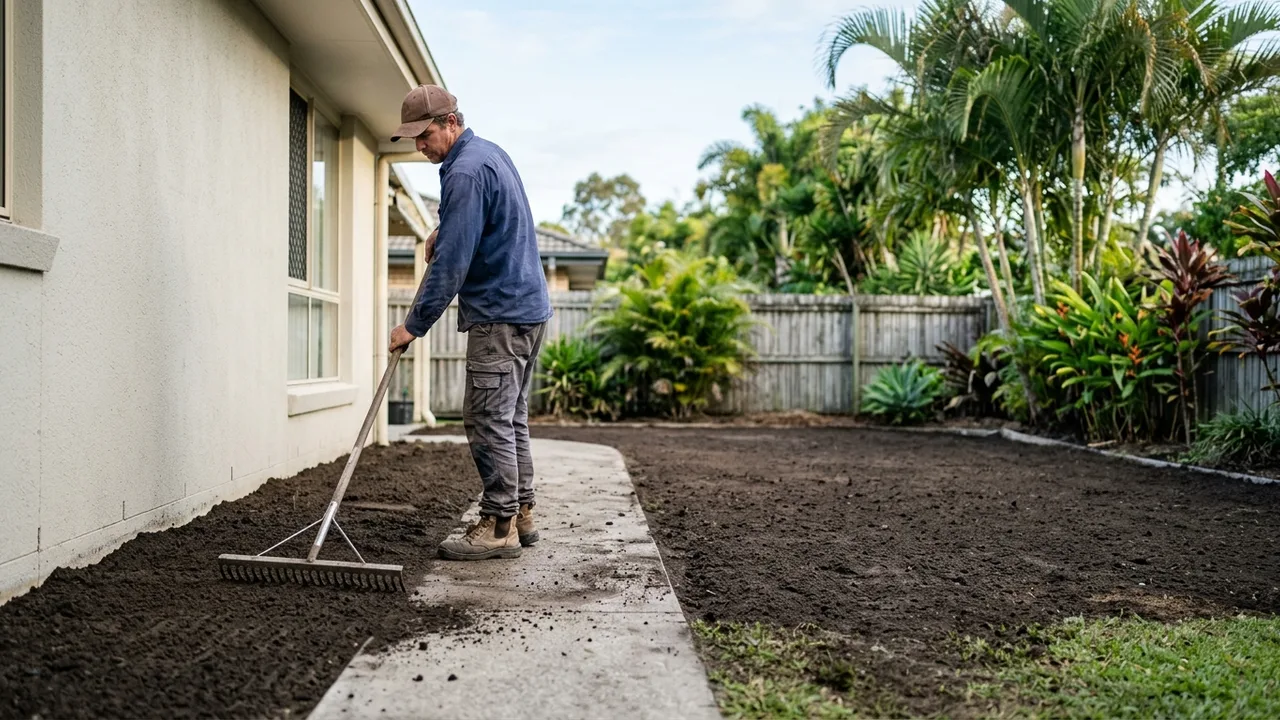
Next comes the levelling. High spots are cut down and low spots filled so the yard has no dips. Land preparation also sets a gentle fall away from the house and paths, so rain runs off rather than sitting against the slab or in the middle of the lawn.
Last, the soil is firmed and rolled. A base that is even and firm is what keeps the finished lawn flat once the kids and the dog are running across it.
Coastal sand, canal blocks and hillside yards
Sandy coastal ground drains quickly, which sounds helpful until summer. It also dries fast and holds little goodness, so it often needs soil worked in before turf goes down.
Low canal estate blocks can hold water after heavy rain, so grading and drainage matter more there. On hillside yards with red soil, the work is managing the fall so water does not wash soil downhill or collect against a retaining wall.
Each yard is different, which is why the installer looks at the ground before settling on a plan.
Natural turf or synthetic grass: the base differs
Natural turf needs loose, even soil with enough depth for roots to spread. The job is levelling, topping up and firming so the roots can knit in.
Synthetic grass needs a different base. It sits on a compacted, free-draining layer that does not move. When artificial grass sinks in the middle with mud underneath, the base was usually too soft or drained poorly. Pet owners also find that a well-drained base helps keep smells down, and no-infill products are an option for dog yards.
Either way, the surface is only as good as the preparation under it.
Doing it yourself or hiring an installer
You can hire a levelling bar and roller and do small, flat yards yourself. The trouble starts on bigger or sloping blocks, where getting an even fall by eye is hard and compacting soil by hand is heavy work. A level that looks right at first can settle into dips after the first few storms.
If drainage pipes or paving are part of the job, licensed specialists do that regulated work. It is worth knowing who is doing which part before anything is dug up.
What drives the cost of preparation
Price follows the work in the ground. The size of the area matters, as does how much old turf and rubble must go and how much soil has to be cut, filled or brought in. Access for machines, a steep fall and drainage needs add effort too.
An itemised quote lays these out so you can see what covers prep, turf and laying. A cheap price that skips the prep is the one most likely to cost you twice.
On-site measure and quote for your yard
If your last lawn sank, pooled or died off in strips, the next one should start with the ground. Request a turf quote and type in the size of the yard, what is growing or lying there now, where water sits after rain and if you want natural turf or synthetic grass.
How it works
-
Look at the yard
The installer walks the ground, measures the area and notes where water sits and how the land falls.
-
Clear the surface
Old grass, weeds, stones and debris come off, and any problem fill is dealt with.
-
Level and grade
Soil is cut, filled and shaped so the yard is even and drains away from the house.
-
Firm the base
The surface is rolled and any soft spots are topped up, ready for turf or a synthetic base.
Scope in detail
- Clearing old grass and weeds Leftover roots rot and leave soft spots, and weeds push back up through new turf.
- Removing rubble, stones and builders' debris Buried offcuts and bricks stop roots going down and leave dry, hollow patches.
- Levelling and grading the soil An even surface with a gentle fall away from the house keeps water moving off the lawn.
- Soil top-up and improvement Sandy or tired soil gets a better base so roots can hold moisture and spread.
- Firming and rolling the base A firm, even base stops the lawn settling into dips once it is walked on.
Site preparation and levelling options
- Soil levelling and grading Highs cut down, lows filled and the surface shaped so water runs off instead of pooling.
- Soil improvement and top-up Extra soil or conditioner worked in where the ground is thin, sandy or compacted.
- Base prep for synthetic grass A compacted, free-draining base built for artificial lawns, including no-infill options.
Site preparation and levelling across Sunshine Coast
Frequently Asked Questions
What should I ask a turf installer about site preparation and drainage on the Sunshine Coast?
How do I prepare for turf installation on my Sunshine Coast yard?
What are the common problems when laying turf over poorly levelled ground?
Get it priced
Tell us what your yard needs and request a turf quote.
Describe the yard and the turf you want, and a local installer will be in touch about the quote.