
Artificial Grass Repair on the Sunshine Coast
Flat patches, mould, torn seams or a lawn sinking over mud can often be fixed without ripping it all out. Request a quote and get the problem looked at on site.
Artificial grass repair on the Sunshine Coast often costs far less than starting again, because the fault is usually in one part of the lawn. A flattened strip, a lifted seam or a mouldy corner can be dealt with on its own. A sunken base is different, and it needs a proper look before anyone gives you an answer.
Artificial grass repair on the Sunshine Coast: flattened, mouldy or torn
Many synthetic lawns can be repaired, and the tradesperson confirms that on site. The grass has three layers that can fail: the fibres on top, the backing that holds them, and the base of compacted material underneath. Only a failed base or perished backing tends to force a full replacement.
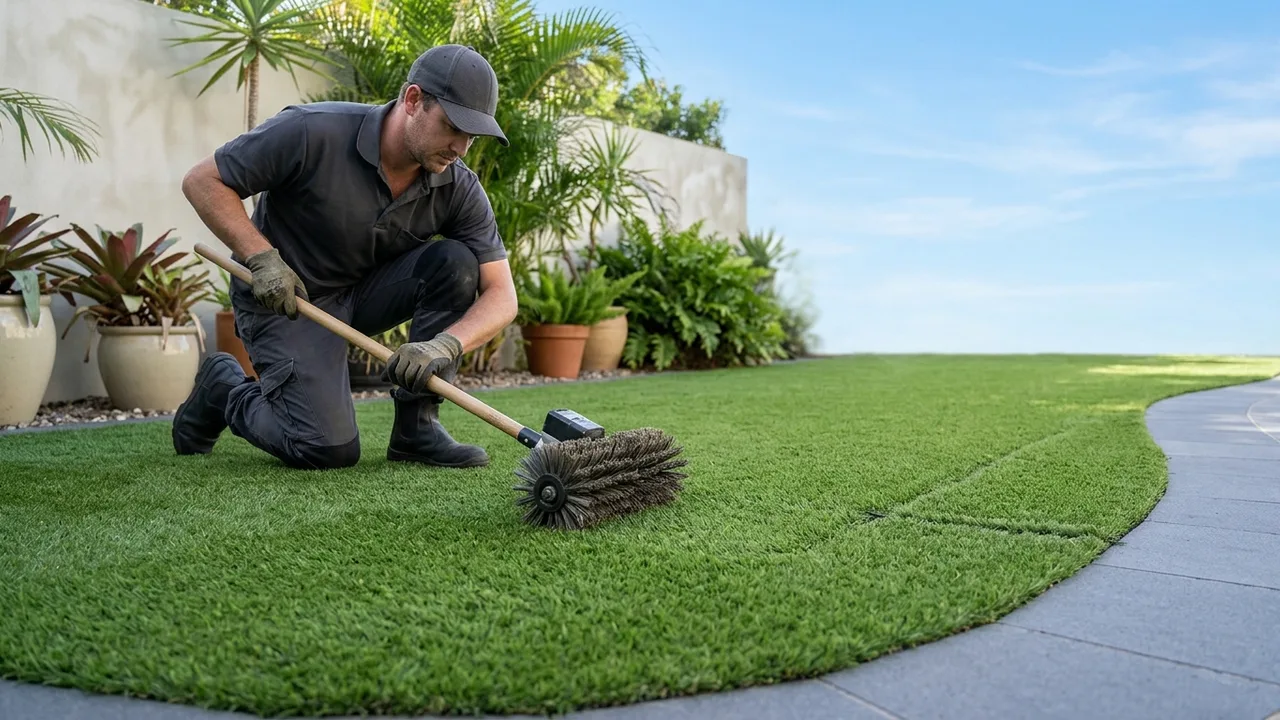
Flattening usually comes from foot traffic, outdoor furniture or a hot spot where sun reflects off glass. Brushing and grooming can often lift the fibres again. Torn seams and lifted edges come from joins that were weakly fixed or pulled by movement in the ground. A seam can be re-glued, and a damaged patch can be cut out and replaced with matching grass.
A fix that treats the real cause holds. A fix that only tidies the surface tends to bring the same problem back within a season.
Mould, smells and drainage in synthetic grass
Mould on artificial grass grows where dirt, damp and shade sit together. Under trees, along fences and in the south side of a yard, leaves and fine soil collect between the blades and keep the surface wet after Sunshine Coast summer storms.
A proper treatment clears the debris first, then kills the growth and rinses the lawn so water can run through the backing. Spraying a cleaner over a dirty surface only hides the problem for a while.
Smells are a separate issue. Urine can remain in the backing or base, and the cleaning method needs to suit where it has collected. Slow drainage can contribute to recurring odour, but the cause needs inspection. The specified backing, base and infill need checking together before a cleaning or drainage remedy is proposed.
Sinking or rippled grass: a base problem, not a surface one
A lawn that sinks in the middle with mud underneath has a base problem. The material under the grass has settled, washed out or was never compacted properly, so the grass follows it down. Coastal sand, canal estate fill and sloping hillside yards each move in their own way, which is why the tradesperson looks at how the ground falls and where water collects.
Ripples and soft spots rarely fix themselves. Pulling the grass back, rebuilding the base and relaying the same grass is often possible if the fibres and backing are in good shape. Where drainage or paving is part of the job, licensed specialists handle the regulated work.
Skipping this step is how a lawn ends up sinking again a year later. The base is where a repair earns its price.
Repair, refresh or replace your synthetic grass
Repair suits a lawn with a local fault and a sound base. Refreshing suits grass that is dirty, matted or dull but still in one piece. Replacement makes sense when the backing is brittle, the fibres are worn through across the yard, or the sinking covers most of the area.
Replacing old artificial grass means lifting the old lawn, checking and levelling the base, then laying new grass with joined seams and secure edges. Removal of the old lawn should be listed in the quote. If the yard gets hard use from a dog or kids, this is also the point to choose a no-infill product or switch to natural turf.
If your lawn came with an extended warranty, mention it in your message. It can affect who should do the work.
Keeping synthetic grass clean in coastal sun and rain
Regular brushing and a rinse keep a synthetic lawn draining and standing up. High-use areas such as the dog run, paths to the clothesline and play spots need attention more often than a quiet corner.
Leaves, pet waste and fine dirt are what turn a clean lawn into a mouldy one, so clearing them early matters more than any product. Salt air and strong sun are hard on cheap fibres, and a lawn that is kept clean is easier to assess if a repair is ever needed.
Sand-filled lawns benefit from the infill being levelled and topped up where it has shifted, because bare patches flatten faster.
On-site measure and quote for artificial grass repair
A quote for artificial grass repair is easiest to give once someone has stood on the lawn. The tradesperson measures the area, looks at the seams and the drainage, and prices cleaning, repair and any base work separately.
Tell us the suburb, how big the lawn is, what the problem looks like and when it started. A line about pets, shade or recent heavy rain helps too. Then request your quote.
How it works
-
Look at the lawn on site
The tradesperson walks the lawn, checks the seams and edges, and presses on any soft or flattened patches to find where the fault starts.
-
Agree the fix and the price
You get an itemised quote that separates cleaning, repairs and any base work, so you can see what each part costs.
-
Clean and treat the surface
Debris is cleared, mould or algae is treated and the surface is rinsed so the backing can drain properly.
-
Repair, refresh or relay
Seams are re-fixed, damaged sections patched and flattened pile lifted. Sunken areas are rebuilt underneath before the grass goes back down.
Scope in detail
- Flattened or matted pile Fibres crushed by foot traffic, furniture or heat can often be lifted back up, which saves replacing good grass.
- Mould, algae and smells Damp, shade and trapped dirt feed growth on the surface, and pet urine can leave odours that need a proper clean.
- Torn or lifted seams and edges Joins that split or edges that pull away let in weeds and trip feet, and they can usually be re-fixed or patched.
- Sinking, rippled or muddy areas Soft spots point to a base that has settled or drains poorly, so the fix happens below the grass.
Artificial grass maintenance and repair options
- Cleaning and mould treatment Removing debris, treating mould and algae and rinsing the surface so water drains through again.
- Pile lifting and refresh Brushing and grooming flattened areas so tired fibres stand up and the lawn looks even.
- Seam, edge and patch repair Re-fixing lifted joins and edges, or cutting out a damaged section and fitting a matching patch.
- Base fixing and relaying Lifting sunken areas, rebuilding the base underneath and laying the grass back flat.
Artificial grass maintenance and repair across Sunshine Coast
Frequently Asked Questions
Can artificial grass be repaired on the Sunshine Coast?
How do I fix common artificial grass problems like flattening and mould?
How do I replace old artificial grass?
Get it priced
Tell us what your yard needs and request a turf quote.
Describe the yard and the turf you want, and a local installer will be in touch about the quote.