
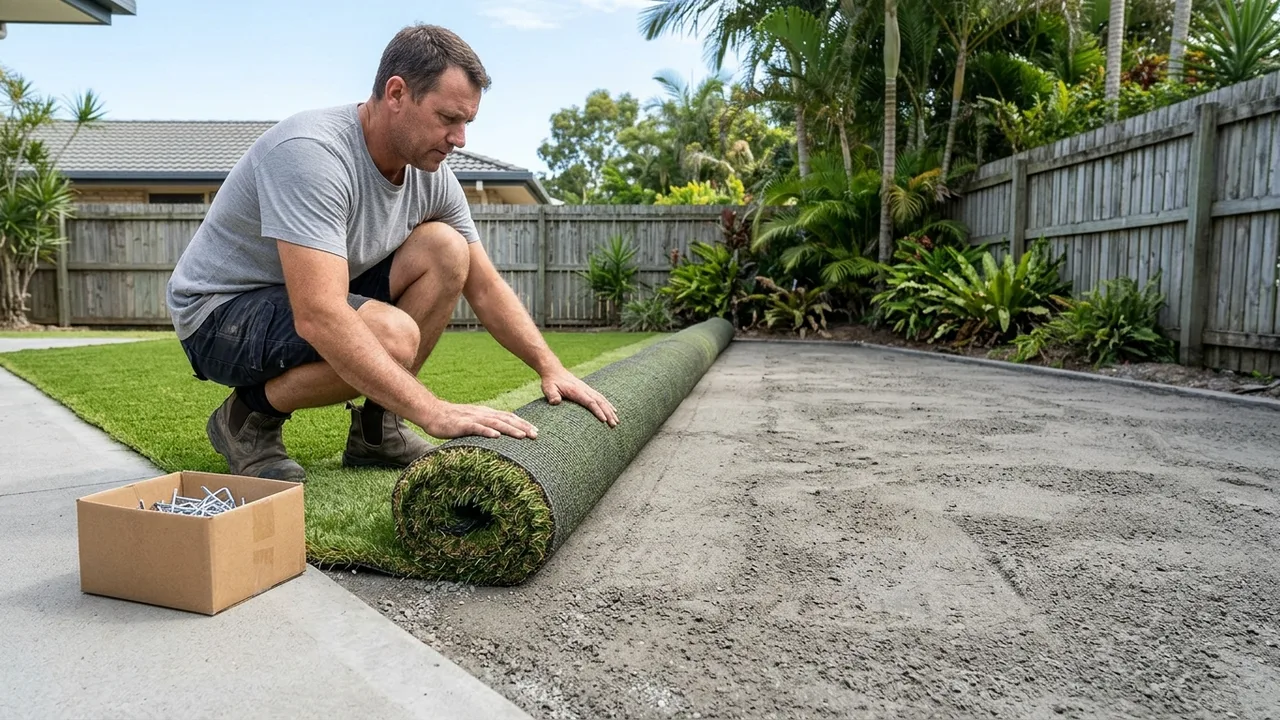
DIY Artificial Grass Sunshine Coast
DIY artificial grass on the Sunshine Coast saves labour when the yard is flat and simple. Sloping, sandy or awkward yards are where a fitted job earns its price.
A DIY artificial grass job on the Sunshine Coast is realistic for a small, flat, squarish patch, and it gets hard once the ground slopes, drains badly or needs lots of cuts. Buying the grass supply-only means you do the labour. The grass is the easy part. The base under it decides whether the lawn stays flat for years or sinks and ponds within a season.
DIY artificial grass on the Sunshine Coast: can you lay it yourself?
Yes, if the area is small, flat and mostly straight edges. A first-timer can lay a plain rectangle of synthetic grass with patience, a good plate compactor hire and careful cutting.
It is harder than it looks when the yard has curves, steps, pavers or a fall toward the house. Each of those adds cuts, and every cut shows if the pile direction is off. Heavy rolls are also awkward for one person to move and position.
A DIY installation guide will tell you the steps. What it cannot do is read your ground. That part takes judgement, and it is where most DIY lawns go wrong.
Where DIY synthetic grass goes wrong
Sinking is the big one. Grass laid over soft or uneven ground dips in the middle, holds water and can leave mud underneath. The surface only stays flat if the base was levelled and compacted before the grass went down.
Seams are next. Joins that are pulled tight or taped badly open up, and the gap shows as a line across the lawn. Bunching and ripples come from laying before the rolls have relaxed or from stretching the grass to make it fit.
Weeds and smell are the last two. Weeds push through where there is no barrier and old roots remain. Smell builds where drainage is poor and pet urine has nowhere to go.
Base mats such as KomboMats are one option some DIYers use to help keep a base even. The supplier can explain whether your ground needs one.
Coastal sand, canal blocks and hillside yards
Local ground changes the job. Coastal sand drains well but shifts, so a base on it needs proper compaction or it moves under foot traffic. Canal estate blocks can sit low and hold water after heavy rain, which makes drainage the first question.
Hillside yards bring red soil and slope. Water runs across the surface, and the base can creep downhill if it is not held at the edges.
If your yard is any of these, the prep is no longer a weekend of raking. A professional installer reads the ground first and sets the base to suit it.
Supply-only or fully installed: what changes the cost
Supply-only removes the labour from the bill, and that is where the saving comes from. You still pay for the grass, the base material, the accessories and any hire gear such as a compactor.
Your time and the risk of a redo sit on your side. A lawn that sinks after a few months can cost more to pull up and relay than a fitted job would have cost at the start.
A fitted quote sets out prep, grass and laying line by line, so you can see what is included. Where drainage or paving is part of the work, the person doing it needs the right QBCC licence.
Heat, pets and no-infill grass
Synthetic grass gets warm in direct sun, and that matters on a west-facing yard or around a pool. Shade and a lighter pile help, and a supplier can talk you through the range.
For a dog, drainage matters more than the grass itself. Urine needs to pass through the backing and base.
Choose the pile for how the yard is used. A play area, a dog run and a courtyard each suit a different feel.
How it works
-
Measure the yard
Length, width and any curves or garden beds set how many rolls you need and where the joins land.
-
Plan the layout
Roll direction matters because the pile leans one way. A good plan keeps seams away from the main view and uses offcuts well.
-
Prepare the ground
Remove the old lawn and roots, level the surface and spread a crushed base. Compact it in layers so it cannot settle later.
-
Lay and join the grass
Roll out, let it relax, trim the edges and join seams with tape and adhesive so they sit flush.
-
Fix the edges and finish
Pin or fix the perimeter, brush the pile upright and add infill if the product needs it.
Scope in detail
- Supply-only synthetic grass You buy the rolls and lay them yourself, which suits a simple yard where you are happy to do the digging and compacting.
- Layout planning before you cut Working out roll direction and where the joins fall stops waste and keeps seams out of the main view.
- No-infill and infill options The right pile suits how the yard is used, such as a dog run or a play area for kids.
- Accessories for edges and joins Jointing tape, adhesive and pegs hold the edges and seams down so they do not lift or open.
- A fitted install when DIY stops making sense Slopes, drainage problems and tight cuts around pavers are better handled by a professional installer.
DIY artificial turf supply options
- Supply-only artificial grass Rolls of synthetic grass for your own install, chosen for pile height, feel and how the yard gets used.
- Layout and measure planning A plan for roll direction, joins and offcuts so you cut once and waste little.
- Base and accessory supply Items such as jointing tape, adhesive and base mats, including products like KomboMats, to help the lawn stay level.
- Fitted artificial turf A professional install when the ground, drainage or edges are beyond a weekend job.
DIY artificial turf supply across Sunshine Coast
Frequently Asked Questions
How do I install artificial turf myself on the Sunshine Coast?
How do I lay turf myself in a Sunshine Coast backyard?
What mistakes sink a turf laying job, and how can I avoid them?
Get it priced
Tell us what your yard needs and request a turf quote.
Describe the yard and the turf you want, and a local installer will be in touch about the quote.