
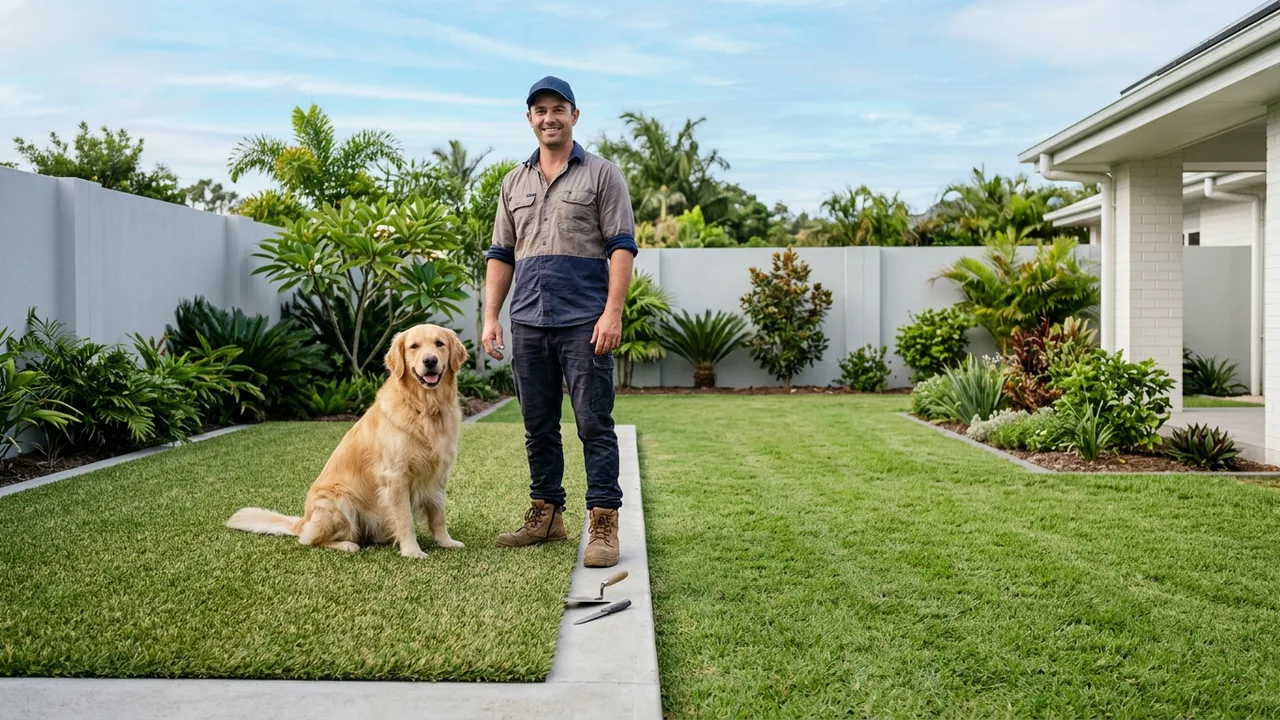
Pet Friendly Artificial Grass Sunshine Coast
Pet friendly artificial grass on the Sunshine Coast gives a dog-worn yard a clean, level surface again. A local installer builds the base so it drains and stays flat.
Pet friendly artificial grass on the Sunshine Coast needs to suit the dog’s use, the available drainage and the cleaning routine you can maintain. Compare the proposed product and base as one system before agreeing to installation.
Sunshine Coast pet friendly artificial grass: what survives a dog
Pet-friendly turf holds up to dogs when three things are right: the backing lets liquid through, the fibres resist digging and wear, and the base underneath drains. Problems with any of these can contribute to odour or damp patches.
Dogs are hard on grass in specific ways. They run the same path along the fence, scratch at corners and pick one spot to toilet. Natural lawn turns to dirt in those places and then to mud in the wet. Synthetic grass takes the same traffic without losing its surface, and urine rinses through the backing when the base below is open and graded.
The product matters, but the base matters more. Even a suitable product can retain moisture or odour over a poorly drained base. The installer confirms the right combination on site once they have seen how the yard sits.
No-infill artificial grass or rubber infill?
Infill is sand or another specified material brushed between the blades to support the pile and help stabilise the surface. Whether a product needs it depends on its construction and the manufacturer’s installation instructions. Loose material can be tracked outside the lawn, so ask how the proposed finish will work beside the house.
No-infill products use a construction intended to work without loose fill. The specified backing, base and cleaning requirements all affect whether a product suits a dog yard.
Neither option removes the need to clean up after a pet. The supplier should provide product-specific drainage and urine-cleaning instructions, including suitable cleaners and the expected maintenance routine. How often and where the dog toilets helps the installer assess the proposed system.
Drainage and base checks for pet turf
Odour depends on the product backing, base drainage, cleaning routine and how the dog uses the area. Urine and rain need somewhere to go. If the base is clay-heavy, uncompacted or flat, liquid sits under the grass and the surface settles into hollows.
The usual fix is built in from the start. The old lawn and roots are removed, the ground is graded so water runs away from the house and the base is compacted in layers until it is firm.
Coastal sand drains quickly but shifts, so it needs firming and edging. Canal estate blocks can hold water low in the yard, and hillside red soil sheds water in a hurry and needs the base held in place. Local installers know these differences. If drainage or paving is part of the job, licensed trades do that regulated work.
Heat, sun and rain on the coast
Synthetic grass gets warm in direct sun, and that matters for paws. Dark, dense pile heats more than lighter products, and open yards with no shade feel it most. Shade from trees, a pergola or a sail helps, and a quick rinse with the hose cools the surface.
UV-stable fibres resist fading under Sunshine Coast sun, and a drained base copes with summer storms. Rain passes through the backing and away, so the yard is usable again soon after a downpour instead of staying boggy.
Natural turf or synthetic grass for your dog?
Natural turf feels cooler and softer, and some dogs prefer it. The trade-off is upkeep. Mowing, watering and fertilising continue, and urine burns patches that need patching. In a yard with a heavy digger or a pair of big dogs, bare dirt tends to return.
Synthetic grass costs more to put in and then asks for much less. There is no mowing or fertilising. Droppings are picked up, urine spots are rinsed and the pile is brushed now and then.
Some yards suit both. A natural patch may suit the play area if sunlight and the variety allow, with a synthetic strip along the fence where the dog runs.
What the quote covers
A quote for pet friendly artificial grass sets out removal of the old surface, base preparation, the grass itself, joins and edging, and laying. Each part is a separate line, so you can see where the money goes.
The main things that move the price are the area, how much digging the ground needs, how far the base must be built up, the grade of grass and how many joins and edges the shape of the yard creates.
How it works
-
Measure the yard
The installer walks the yard, measures it and notes how the ground falls, where the dog spends time and what stands there now.
-
Itemised quote
Removal, base, grass and laying are priced as separate lines, so you see what each part of the job costs.
-
Dig out and build the base
The old lawn comes out, the ground is graded to shed water, and the base is compacted in layers.
-
Lay, join and finish
The grass is rolled out, seams are joined and the edges are fixed down. Then the surface is brushed up so it stands evenly.
Scope in detail
- Removing the worn lawn Dead grass, roots and dog-compacted dirt are stripped out so nothing rots or settles under the new surface.
- Base and drainage The installer assesses where urine and rain will drain and specifies the base with the product’s cleaning requirements in mind.
- No-infill grass supply and laying The pile is cut to fit, joined with strong seams and edged to reduce lifting, though determined digging can still damage it.
- Pet zones and play areas Toilet corners, runs along the fence and kids' play spots can be laid with the same base so the whole yard stays usable.
Pet-friendly artificial grass options
- No-infill artificial grass Dense backing and pile that stay put without sand or rubber, so less ends up on paws and floors.
- Dog run and pet zone lawns A defined patch of synthetic grass for toileting or exercise, built to drain and rinse clean.
- Full backyard replacement A worn natural lawn removed and the whole yard relaid with a level, drained base.
Pet-friendly artificial grass across Sunshine Coast
Frequently Asked Questions
What goes wrong with pet friendly artificial grass on the Sunshine Coast, and how is it avoided?
How much upkeep does synthetic grass need compared with natural turf in a dog yard?
Is pet friendly artificial grass safe for kids and dogs?
Get it priced
Tell us what your yard needs and request a turf quote.
Describe the yard and the turf you want, and a local installer will be in touch about the quote.